Updated 01 April 2026
New Government changes to KiwiSaver came into effect on 1st April 2026. These changes were announced as part of the 2025 Budget and are designed to help New Zealander’s build stronger retirement savings. Here's what you need to know.
What are the changes:
-
Your minimum contribution has changed from 3% to 3.5% of your before-tax pay
-
Your employer is also required to contribute 3.5%, before tax
-
These rates have risen automatically for both employee and employer contributions
-
There’s also a further increase planned to 4% from 1 April 2028, making this part of a shift toward higher KiwiSaver savings in the future
- Further details about these changes can be found on the IRD website.
Reasons why your future self will be grateful
You may notice a small reduction in your take‑home pay, but over time the increase in your contributions can make a meaningful difference to your KiwiSaver balance at retirement. If you still have many years until retirement, the combined effect of this increase can really add up. If you are comfortable with higher levels of risk, switching to a Growth or High Growth fund could further increase your KiwiSaver balance.
Is your current KiwiSaver investment working as hard as you’d like?
With higher contributions in effect, now is a good opportunity to pause and check whether your KiwiSaver investment is still working as hard as it could be for you. The choices you make today can make a substantial difference later.

We’ve put together a simple scenario to demonstrate how an increase in contributions to the new default rates and choosing a different type of fund could make a difference to your KiwiSaver balance over time.
What the retirement of a 35 year old (today) might look like
Meet Jed, a 35 year old homeowner, who earns $90k per year. He has a KiwiSaver balance of $30k and from 1 April 2026, Jed and his employer will be contributing at the new default rate of 3.5% to his KiwiSaver account (increasing to 4% on 1 April 2028).
The chart below shows that if Jed only contributes at the new default rates to his KiwiSaver account, the expected dollar value of his KiwiSaver balance at age 65 could increase from $450k to $550k. An extra $100k in retirement will surely make a difference to Jed!
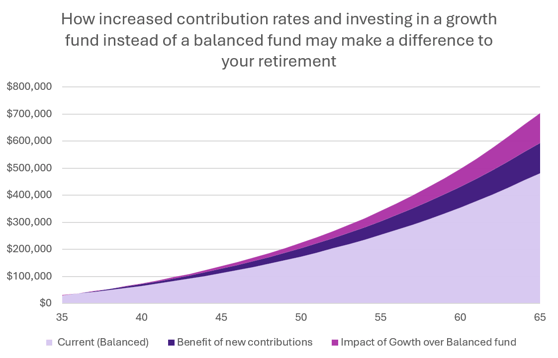
This also shows that with around 30 years until retirement, if Jed switches from a balanced fund to a growth fund, he may potentially materially increase the expected value of his KiwiSaver savings over time to an end value of over $650,000.
Small changes now, a better retirement later
These KiwiSaver changes are a positive step toward helping New Zealander’s build stronger retirement savings. While the increases may feel modest, over time it can make a difference, especially when combined with an investment approach that suits your timeframe and comfort with risk.
If you’re unsure whether your KiwiSaver investment is set up in the right way, consider speaking with a financial adviser who can help you understand your options and what’s appropriate for your circumstances.
Looking for a Financial Adviser? We can help with that...

Important information
These figures are estimates only and are based on assumptions about investment returns, contribution levels, and time in the market. They are not guaranteed, and actual outcomes will vary depending on individual circumstances and market performance. Past performance is not an indicator of future performance.